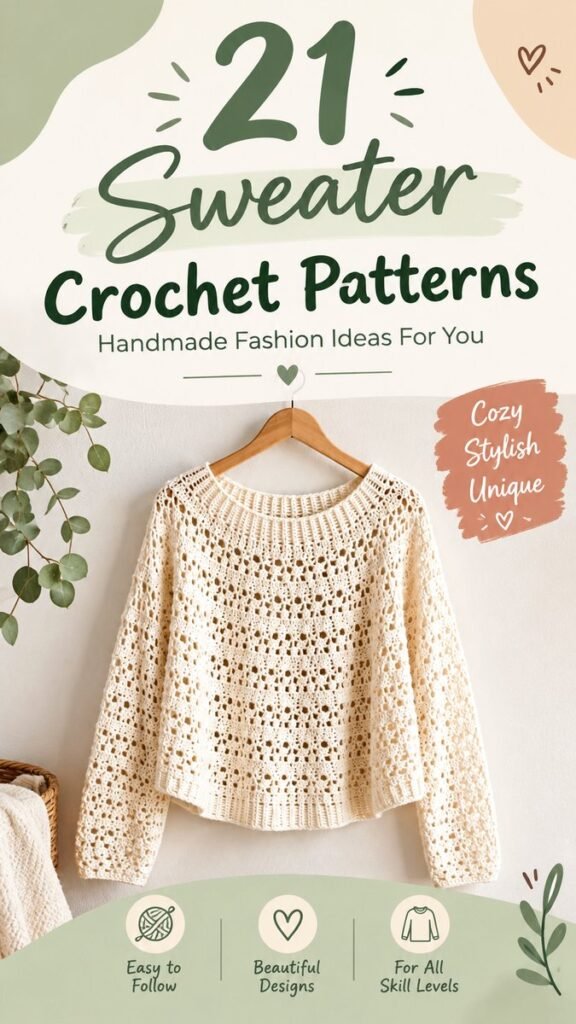
Crochet sweaters have a special way of making handmade fashion feel both cozy and effortlessly stylish. A beautiful crochet sweater design can transform simple yarn and familiar stitches into a wearable piece with texture, personality, and timeless charm. The featured style showcases an airy openwork texture, a relaxed silhouette, long sleeves, and a soft neutral finish that makes it easy to imagine wearing throughout the year.
Whether you are an experienced crocheter looking for your next creative project or simply collecting handmade fashion inspiration, crochet sweater designs offer plenty of room for customization. You can experiment with stitch patterns, yarn weights, colors, sleeve lengths, necklines, and proportions to create something that feels completely your own.
Key Takeaways
- Openwork crochet creates a lightweight, textured sweater with plenty of visual interest.
- Neutral yarn shades make handmade sweaters easy to style with different outfits.
- Choosing the right yarn weight can dramatically change the drape and overall feel.
- Simple garment shapes provide a practical foundation for experimenting with crochet stitches.
- Small changes to cuffs, hems, necklines, or sleeves can give a familiar design a completely different personality.
Why Crochet Sweater Designs Are So Inspiring
A crochet sweater is more than a cold-weather layer. It is an opportunity to combine color, texture, construction, and personal style in one handmade project. Unlike mass-produced clothing, a crocheted garment can be adjusted as you work, allowing you to create a fit and appearance that reflects your preferences.
The sweater shown in this style of inspiration has a delicate, lacy surface rather than a dense, heavy fabric. That detail gives it a relaxed and breathable appearance while still making it visually substantial. The result is a garment that feels comfortable and artistic without looking overly complicated.
Important: When choosing a crochet sweater design, think about how the finished garment will actually be worn. A beautiful stitch pattern is only one part of a successful sweater. Yarn choice, fit, fabric weight, and ease all influence whether the final piece feels comfortable and practical.
Choosing the Right Crochet Sweater Style
There are countless ways to approach a crochet sweater design. Some styles are fitted and structured, while others use an oversized or relaxed shape. Some focus on bold color changes, and others let the stitch pattern become the main feature.
If you love the soft handmade appearance of an openwork sweater, look for designs that incorporate decorative stitches without making the fabric too dense. Lace-inspired crochet, mesh sections, shell details, clusters, and repeating motifs can all add dimension while maintaining a light visual effect.
Relaxed and Comfortable Silhouettes
A relaxed silhouette is an excellent starting point for handmade sweaters because it offers a comfortable fit and allows the crochet texture to remain visible. A slightly loose body can also create a casual appearance that works well with jeans, leggings, skirts, or layered outfits.
When working from a pattern, pay attention to the intended amount of ease. The measurements of the finished garment are often more useful than relying only on standard clothing sizes. Crochet fabric can behave differently depending on the stitch pattern and yarn, so measuring as you go can help you achieve a more predictable result.
Openwork and Lace-Inspired Textures
Openwork is one of the most recognizable features of an airy crochet sweater design. The spaces between stitches create a decorative fabric that can look intricate even when the construction is based on repeating rows or motifs.
This type of texture is especially appealing when you want your handmade garment to feel delicate rather than bulky. It can also create interesting layers when worn over a simple camisole, tank top, fitted tee, or lightweight base layer.
Selecting Yarn for a Handmade Crochet Sweater
Yarn selection can completely change the character of a crochet sweater. The same basic stitch pattern may look structured and substantial with one yarn but soft and drapey with another. Before starting a large garment, it is worth making a small swatch to see how the yarn behaves with the chosen stitches.
Lightweight Yarn for Airy Designs
For a sweater inspired by an open, delicate texture, a lighter yarn can help preserve the spaces between stitches. Lightweight yarn may also create a softer drape, making the garment feel less stiff when worn.
Neutral shades such as cream, ivory, oatmeal, beige, soft taupe, or gentle gray are particularly versatile. They allow the stitchwork to remain the focus while making the finished sweater easy to combine with existing clothing.
Consider Texture and Drape
Do not choose yarn based on color alone. Feel the yarn, examine its structure, and consider how it responds when crocheted. Some fibers create a crisp stitch definition, while others produce a softer and more fluid fabric.
A sweater needs enough structure to maintain its shape while remaining comfortable against the body. If a fabric feels too stiff in your swatch, it may not create the relaxed effect you want. If it is extremely loose and unstable, consider adjusting the hook size, stitch pattern, or yarn choice.
Expert Insight
A small gauge swatch can save hours of work on a sweater. Use it to check stitch appearance, fabric density, drape, and measurements before committing to the complete garment.
How to Personalize a Crochet Sweater Design
One of the best things about crochet fashion is the ability to make small design changes without completely reinventing a pattern. Once you understand the basic construction, you can often adapt details to suit your wardrobe and preferred style.
Experiment With Sleeve Length
Long sleeves create the cozy look associated with classic sweaters, but shorter sleeves can make the same design feel lighter and more suitable for transitional weather. You can also explore three-quarter sleeves for a practical middle ground.
When changing sleeve length, keep the proportions of the garment in mind. A cropped body paired with long sleeves can create a contemporary silhouette, while a longer body may work beautifully with slightly shorter sleeves.
Adjust the Neckline
The neckline is another detail that can change the overall personality of a crochet sweater. A rounded neckline offers a classic appearance, while a wider opening can create a relaxed, layered look.
If you are adapting a design, make sure the neckline remains comfortable and maintains the intended shape. Blocking and careful finishing can also help create a cleaner edge.
Play With Color
A cream or neutral sweater has a timeless quality, but there is no reason to stop there. Soft sage, dusty rose, warm brown, muted blue, terracotta, or charcoal can give a familiar crochet pattern a fresh identity.
For an especially creative project, consider using one color for the main body and a contrasting shade for the cuffs and hem. Stripes, color blocks, and subtle tonal changes can also highlight the construction of the garment.
Crochet Techniques That Add Visual Interest
You do not necessarily need an extremely complicated pattern to create an impressive sweater. Combining a simple garment shape with an interesting stitch repeat can produce a sophisticated handmade result.
- Open mesh: Creates an airy fabric with a light, modern appearance.
- Shell stitches: Add curved texture and decorative movement.
- Cluster stitches: Create raised sections that make the surface more dimensional.
- Ribbed crochet: Works especially well around cuffs, hems, and necklines.
- Repeating motifs: Can create a distinctive visual rhythm across the sweater.
Pro Tip: If the main stitch pattern is highly decorative, keep the garment shape relatively simple. Letting one strong design element take center stage often creates a more polished finished sweater.
Getting the Fit Right
Fit is one of the most important considerations when making crochet clothing. Even a gorgeous stitch pattern will not feel satisfying if the finished sweater is too tight, too loose, too short, or too long for the intended wearer.
Before beginning, take accurate body measurements and compare them with the measurements provided by the pattern. Pay particular attention to bust or chest width, garment length, sleeve length, and upper-arm circumference.
Measure the Finished Garment
Rather than relying only on a size label, compare the finished measurements to a sweater you already enjoy wearing. Lay that garment flat and measure its width and length. This gives you a practical reference for the amount of ease you prefer.
Remember that crochet fabric can stretch or relax with use. If your stitch pattern is particularly open, the final measurements may change slightly depending on yarn characteristics and finishing.
Use a Gauge Swatch
A gauge swatch helps determine whether your tension matches the intended fabric. If your stitches are significantly larger or smaller than expected, the finished sweater may not have the dimensions you want.
Use the swatch as more than a measurement exercise. Look at its texture, flexibility, and drape. These qualities are especially important for a crochet sweater because they influence both comfort and appearance.
Styling Handmade Crochet Sweaters
A neutral crochet sweater is remarkably easy to style. The open texture can become the focal point of an outfit, while the understated color allows accessories and other clothing pieces to remain flexible.
For a casual everyday look, pair an airy crochet sweater with jeans and simple flats or sneakers. For a more polished outfit, try it with tailored trousers or a flowing skirt. Layering also creates opportunities to change the appearance of the sweater throughout the seasons.
If the crochet fabric is especially open, a contrasting or tonal base layer can emphasize the stitch pattern. A similar shade creates a subtle effect, while a darker or lighter layer underneath can make the openwork texture more noticeable.
Finishing Touches That Make a Difference
Finishing is where a handmade sweater begins to look truly polished. Take time to inspect the edges, weave in yarn ends securely, and shape the garment carefully according to the pattern instructions.
Blocking can be particularly helpful for openwork crochet because it can encourage the stitch pattern to settle into a more defined shape. Always consider the fiber and follow appropriate care instructions before applying moisture or heat.
Clean Edges and Consistent Details
Cuffs, hems, and necklines should complement the main stitch pattern rather than compete with it. A simple ribbed border can provide structure to a decorative body, while a narrow finishing edge can keep an airy design feeling delicate.
Consistent tension also contributes to a professional appearance. If your tension changes significantly during the project, pause occasionally and check the fabric so that uneven sections can be addressed before the sweater is complete.
Making Your Crochet Sweater Project More Enjoyable
Large crochet garments can take time, so choosing a design you genuinely enjoy is important. A beautiful stitch repeat can make the process more engaging, especially when the pattern has enough variation to keep you interested without becoming overwhelming.
Organize your materials before starting, keep your measurements nearby, and mark important sections as you work. If the pattern uses a repeating sequence, stitch markers can help you keep track of rows and shaping.
- Choose a sweater shape that matches your preferred wardrobe style.
- Select yarn based on weight, texture, color, and desired drape.
- Make a gauge swatch before beginning the full garment.
- Compare pattern measurements with a sweater that fits well.
- Check your work regularly as the sweater grows.
- Finish and block the garment carefully for a neat final appearance.
Why This Matters
- A thoughtful yarn choice helps the stitch pattern look its best.
- Accurate measurements make handmade clothing more comfortable to wear.
- A simple silhouette gives decorative crochet textures room to stand out.
Finding Inspiration for Your Next Crochet Sweater
Collecting crochet sweater ideas is a useful way to discover the details you want in your own project. Save designs that catch your attention because of their stitch texture, color palette, silhouette, neckline, sleeve shape, or overall mood.
You might love the openwork texture of one design, the neckline of another, and the relaxed proportions of a third. These individual details can help you define the style you want before choosing a pattern or beginning your own adaptation.
The featured neutral aesthetic is especially versatile because it combines handmade texture with an understated color palette. It demonstrates how a sweater can feel decorative and distinctive without relying on bold colors or complicated visual elements.
At a Glance
Quick Points
- Choose breathable textures for a lightweight handmade look.
- Use neutral colors for effortless outfit combinations.
- Always check gauge and finished measurements before making the full sweater.
- Customize sleeves, colors, borders, and necklines to reflect your style.
- Finish carefully so the stitchwork looks clean and defined.
Conclusion
A thoughtfully chosen crochet sweater design can become one of the most rewarding handmade additions to a wardrobe. The combination of textured stitches, comfortable construction, and customizable details gives crocheters endless ways to create something personal.
An airy neutral sweater is a beautiful starting point because its delicate texture provides plenty of visual interest while its simple color makes styling easy. From yarn selection and gauge to sleeve length and finishing, each decision contributes to the character of the final garment.
Whether you prefer delicate openwork, cozy textured stitches, classic shapes, or modern oversized silhouettes, let your next crochet sweater reflect the way you actually want to dress. Gather inspiration, test your yarn and stitch combination, check your measurements, and enjoy the creative process from the first chain to the final finishing touch.
Tags
Crochet Sweater Crochet Sweater Design Crochet Patterns Handmade Fashion Crochet Clothing Crochet Ideas DIY Crochet Crochet Fashion